
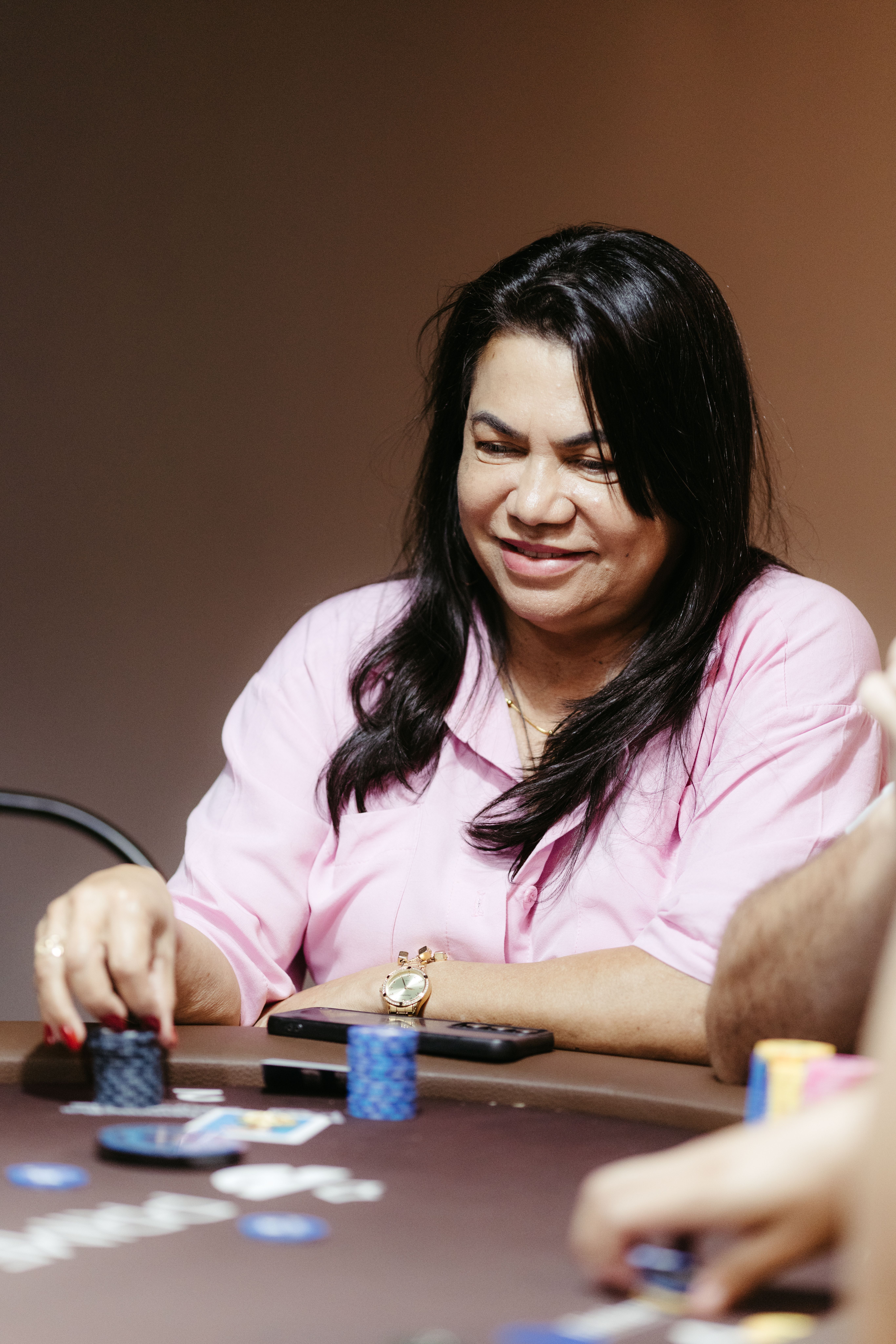
I have dedicated countless hours at blackjack tables, in land-based casinos and on digital platforms, and I can guarantee you with certainty that this game compensates preparation more than nearly any other casino game https://moonwinscasino.ca/. When I log into Moonwin Casino and join a blackjack table, I am not relying on luck alone. I am relying on a structured decision-making framework refined over decades by mathematicians and professional players. This guide is my attempt to share that framework with you in a manner that is instantly usable. I will guide you through the core principles of basic strategy, clarify why each choice counts, and illustrate how to implement these concepts directly inside the Moonwin Casino game library. Whether you are totally inexperienced to blackjack or have been playing for years, the information I present here will refine your strategy and assist you in making better decisions at the table.
Comprehending the Foundation of Essential Strategy
When I explain basic strategy in blackjack, I am describing a mathematically proven set of rules that indicates exactly how to handle every possible hand against every possible dealer upcard. This is not a collection of hunches or superstitions. It is the result of computer simulations that have examined millions of hands to identify the optimal move in each scenario. The goal of basic strategy is straightforward: it reduces the house edge to its lowest possible point, often cutting it to less than half of one percent when the rules are advantageous. At Moonwin Casino, I always check the specific table rules before I sit down, because changes in things like the number of decks, whether the dealer stands on soft 17, and doubling restrictions can change the optimal play slightly. Understanding that basic strategy exists and dedicating to learning it is the single most important step any player can take.
The advantage of basic strategy is that it takes away emotion and guesswork from the equation entirely. I do not have to debate whether I should hit my 16 against a dealer’s 10. The math has already resolved that question definitively. Over the long run, using the strategy will not guarantee that I win every session, but it will ensure that I lose less money to the house edge than a player who makes decisions based on gut feeling. I have seen too many players hold on 15 against a dealer’s 7 because they are scared to bust, not realizing that the dealer is statistically favored to make a hand in that situation. Basic strategy gives me the certainty to make the correct play even when it feels uncomfortable. At Moonwin Casino, the digital interface makes it convenient to take your time and consult a strategy chart if you are still learning the decisions.
Stiff Hands and the Skill of When to Take a Card
A stiff hand in blackjack is any hand that lacks an Ace worth 11, or has an Ace that is taken as 1 to prevent going over 21. These hands are rigid and dangerous because a one poor card can bust you. When I have a hard hand, my main focus is the dealer’s upcard. If the dealer shows a 2 through 6, they are in a disadvantageous situation statistically, and my aim becomes hoping the dealer breaks. I will stand on any hard total of 12 or higher in these scenarios, because the chance of breaking outweighs the likely advantage of improving my hand. The logic is straightforward: the dealer will bust about 40 percent of the time when holding a 5 or 6, so I want to stay in the hand and rely on that likelihood.
The math alters considerably when the dealer reveals a 7 or above. Now the dealer has a powerful upcard and is likely to form a made hand of 17 or above. Against a 7 through Ace, I need to be more assertive with my own hand. I will take a card any hard total of 16 or less against a dealer’s 7 or greater, because standing with a weak total against a good dealer hand is a losing proposition in the overall picture. The toughest hand in blackjack is the hard 16 against a dealer’s 10. Every instinct in me prefers to stay and hope the dealer busts, but the numbers says that drawing is the somewhat more favorable action. At Moonwin Casino, I keep in mind that I am playing a long game, and selecting the optimal statistical move time after time is what minimizes the house advantage.
Hands with a flexible Ace and the Flexibility of the Ace

Soft hand totals contain an Ace valued as 11, which provides them with a special flexibility that hard hands are missing. Since the Ace can decrease to a worth of 1 should I draw a high card, I am able to hit soft hands boldly without any risk of busting on a individual card. This changes the entire strategic picture. Whenever I have a soft 13 up to 17, I nearly always hit versus a dealer’s high upcard of 7 or above. The goal is to improve the hand to a stronger total, since a soft 17 is simply not viable when facing a dealer’s made hand or strong draw. The security of the Ace allows me to pursue better possibilities that would become far too hazardous with a hard hand of the identical total.
Doubling down on soft hands is one more powerful tool that I use frequently at Moonwin Casino. Whenever the dealer displays a weak card like a 5 or 6, I shall double down on soft 13 up to 18 when the rules enable it. The logic is that I am probable to upgrade my hand at the same time as the dealer is likely to bust, and doubling permits me to put more money on the table in a favorable situation. A standard example is soft 17 when facing a dealer’s 6. I am not satisfied with 17 at this point. I wish to double my bet and draw exactly one additional card, hoping to hit a 3, 4, or 10-value card that provides me a powerful total. The versatility of the soft hand makes these aggressive plays mathematically correct, and I have secured many bonus units by exploiting them.
Increasing Bets and Capitalizing on Beneficial Scenarios
Doubling down is the method that allows me to boost my bet mid-hand when the odds are firmly in my advantage. When I double up, I agree to receiving exactly one more card and doubling up my initial bet. The spots where this is right are defined and well-defined. The most frequent doubling situation is when I hold a hard 11 against any dealer upcard except an Ace. With an 11, my likelihood of drawing a 10-value card and achieving 21 is extremely high, and I want to increase my profit in that position. Against a dealer’s poor card like a 5 or 6, I will also double up on hard 9 and 10, because the dealer’s high bust probability combines with my solid drawing position to produce a rewarding chance.
I also focus carefully to soft doubling scenarios, which I discussed earlier. Beyond the typical hard totals, doubling on soft hands against low dealer upcards is a signature of expert basic strategy. At Moonwin Casino, I ensure to comprehend the particular doubling policies of the table I am using. Some tables allow doubling on any two cards, while others limit doubling to particular totals. Some permit doubling after splitting, which is a player-friendly policy that I eagerly pursue. Every additional doubling chance I can take advantage of erodes at the house edge. I treat doubling with discipline. I never double up on a guess or because I believe lucky. I do it only when the mathematical likelihood is advantageous, and I acknowledge that even correct doubles will sometimes be unsuccessful.
The Advantage of Splitting Pairs Rightly
Separating pairs is one of the most misunderstood aspects of blackjack, and I have watched numerous players commit expensive blunders in this field. When I am handed a pair, I have the opportunity to split them into two distinct hands, each with its own stake equal to my initial wager. The decision to split should not ever be based on a urge to merely play more hands. It must be based in the statistical edge obtained by converting one weak hand into two possibly stronger ones. The most important rule I follow is to consistently split Aces and Eights. Aces give me two opportunities to draw a 10-value card for a standard blackjack, while a pair of Eights makes a terrible total of 16 that is changed into two hands beginning with a much more playable 8.
There are additionally pairs that I under no circumstances split under any normal rules. I do not split Tens, because a total of 20 is already an excellent hand that will win the vast bulk of the time. Splitting it into two hands starting with 10 is a pointless risk. Similarly, I never split Fives. A pair of Fives gives me a total of 10, which is a perfect starting point for increasing the bet against most dealer upcards. Separating them would turn one strong drawing hand into two weak starting hands. At Moonwin Casino, the splitting rules are plainly presented, and I always check whether I am permitted to double after split or resplit pairs, as these options add significant strategic depth and can even more reduce the house edge when employed correctly.
Handling Your Bankroll Over Sessions
No blackjack strategy guide would be finished without a serious discussion of bankroll management. I have found through experience that even optimal basic strategy cannot rescue a player who bets recklessly. Before I ever open a blackjack table at Moonwin Casino, I determine on a session bankroll that I am fine losing completely. This is money set aside exclusively for entertainment, and it never stems from funds needed for essential expenses. I then split that session bankroll into distinct betting units. A typical guideline I use is to have at least 30 to 40 betting units per session. If my base bet is five dollars, I want a session bankroll of at least 150 to 200 dollars to withstand the natural swings of the game.
I also define strict win and loss limits for myself. A loss limit prevents me from chasing losses and digging a deeper hole when variance turns against me. the shortlist A win limit guarantees profits and stops me from giving back a winning session to the house. At Moonwin Casino, the platform provides tools that allow me to record my play and set personal limits, which I use regularly. I consider blackjack as a marathon, not a sprint. The house edge means that over a large sample of hands, the casino has a mathematical advantage. My goal is to appreciate the game, use my strategy correctly, and occasionally walk away a winner during favorable variance swings. Disciplined bankroll management guarantees I can keep competing and savoring the game for the long term.
Adapting Strategy to Diverse Rule Variations
Not all blackjack tables are made equal, and one of the first things I do when exploring the game selection at Moonwin Casino is review the specific rules of each table. The number of decks in play has a noticeable impact on the house edge. A single-deck game with favorable rules can offer a house edge as low as 0.15 percent, while an eight-deck game with less good rules might push that edge above 0.6 percent. The difference may sound small, but over thousands of hands it adds up considerably. I also check whether the dealer stands on soft 17 or hits it. A dealer who stands on soft 17 gives the player a somewhat better edge, and this rule alone can shift basic strategy decisions on hands like 11 against an Ace or soft 18 against a dealer’s 2.
Other rule variations that I examine include whether surrender is offered, whether doubling after splitting is allowed, and what the blackjack payout ratio is. A table that pays 6:5 for a blackjack instead of the traditional 3:2 greatly increases the house edge and is one I generally avoid. Late surrender, when available, allows me to forfeit half my bet on extremely bad hands like hard 16 against a dealer’s 10, and this option slightly alters basic strategy. At Moonwin Casino, I appreciate that the table rules are transparently displayed before I join, allowing me to select the most player-friendly conditions. I keep a mental checklist of rule priorities: 3:2 blackjack payouts, dealer stands on soft 17, and the ability to double after splitting are my non-negotiables.
Frequent Blunders That Undermine Your Edge
In my years of playing and watching blackjack, I have compiled a list of missteps that players repeat repeatedly, regularly without realizing how expensive they are. The most widespread mistake is playing based on instinct rather than a plan. I have observed players stand on 12 against a dealer’s 2 because they are hesitant to bust, when the correct play is to hit. The fear of busting is psychologically powerful but numerically misguided. Another common error is accepting insurance when the dealer shows an Ace. Insurance is a side bet that the dealer has a 10 in the hole, and it comes with a house edge of over 7 percent in most games. I never purchase insurance unless I am counting cards, which is a separate discipline entirely and not part of basic strategy.

Beyond these strategic errors, I see many players make fundamental mistakes in how they approach the game overall. Recovering losses by increasing bet sizes after a losing streak is a quick track to depleting a bankroll. Playing while tired, distracted, or under the influence of alcohol leads to sloppy decisions that erase hours of controlled play. At Moonwin Casino, I view each hand as an independent event and zero in solely on making the correct decision in the moment. I do not think about the previous hand or the next one. Another less obvious mistake is forgetting to adjust strategy for specific rule sets. A basic strategy chart created for a multi-deck game where the dealer stands on soft 17 will not be fully optimal for a single-deck game with alternative rules. I always tailor my strategy to the table conditions.
Building a Consistent Practice Routine
Learning basic strategy is not an intellectual exercise that can be completed by reading a chart once. It requires repetition until the correct decisions become automatic. I built my own proficiency by using strategy drills and free-play modes extensively. At Moonwin Casino, I take advantage of any demo or low-stakes tables to practice without financial pressure. I start by focusing on the most common hands: hard totals against dealer upcards of 2 through 6, then 7 through Ace. Once those are second nature, I move on to soft hands and pair splitting. I keep a strategy chart open in another window or on my phone during practice sessions, but my goal is to memorize the decisions so I no longer need to reference it.
I also suggest varying the table rules during practice. Playing only one set of conditions can create blind spots when you encounter a different game. I practice on tables with and without surrender, with different numbers of decks, and with different soft 17 rules. This fosters a deeper understanding of why certain plays change and prevents me from being caught off guard. At Moonwin Casino, the variety of blackjack offerings provides an excellent training ground. I set aside dedicated practice time each week, even when I am not planning to play for real money. Like any skill, blackjack strategy degrades without maintenance. Regular, focused practice keeps my decision-making sharp and ensures that when I do sit down at a real-money table, I am playing as close to perfectly as possible.
FAQ
How much is the house edge in blackjack when employing perfect basic strategy?
When I use perfect basic strategy under standard favorable rules, the house edge usually ranges between 0.3 and 0.6 percent. This assumes the dealer stands on soft 17, reddit.com blackjack pays 3:2, and doubling after splitting is allowed. The exact number varies with the specific rule set of the table you are playing. This makes blackjack one of the lowest house edge games in the casino when played correctly.
Is it wise to ever take insurance in blackjack?
I never opt for insurance when playing basic strategy. Insurance is a side bet that the dealer has a 10-value card under an Ace, and it comes with a house edge exceeding 7 percent in most multi-deck games. The only scenario where insurance becomes profitable is if you are an accomplished card counter who knows the remaining deck is heavily weighted toward 10-value cards. For the basic strategy player, it is invariably a losing proposition.
What number of decks are best for a blackjack player?
When everything is the same, fewer decks are better for the player. A single-deck game with good rules can offer a house edge as low as 0.15 percent. However, casinos often modify other rules to balance, such as paying 6:5 on blackjack instead of 3:2. I always emphasize the blackjack payout and other player-friendly rules over the number of decks alone. A six-deck game with strong rules can be better than a single-deck game with unfavorable rules.
May I use a strategy card while playing at Moonwin Casino?
Absolutely, using a basic strategy reference card is perfectly acceptable when playing online blackjack at Moonwin Casino. The digital format means you are playing at your own pace, and there is no dealer or pit boss to disapprove of a strategy aid. I recommend new players to keep a strategy chart handy until the decisions become automatic. This is one of the major advantages of online play compared to a physical casino environment.
What is the difference between hard and soft hands in blackjack?
A hard hand is any hand without an Ace, or with an Ace that must be counted as 1 to avoid busting. These hands are inflexible and can bust with a single card. A soft hand contains an Ace counted as 11, giving it flexibility because the Ace can drop to 1 if needed. This distinction is crucial because the optimal strategy for hitting, standing, and doubling changes dramatically between hard and soft totals of the same numerical value.
Is it preferable to play blackjack on mobile or desktop at Moonwin Casino?
I have played extensively on both systems, and the moves remain the same no matter device. Moonwin Casino adjusts its blackjack tables for mobile play, with clear card displays and touch-friendly betting interfaces. The decision hinges on personal preference and ease. I find mobile play ideal for brief sessions, while desktop gives a bigger screen that can be useful when consulting strategy charts during practice.
How long does it take to learn basic strategy fully?
With committed practice, most players can master the key decisions of basic strategy within a few weeks. I suggest focusing on the most frequent hands first, then gradually adding the less frequent scenarios. Using study cards, strategy apps, and the demo tables at Moonwin Casino accelerates the process greatly. The secret is consistent daily practice rather than extended study sessions. Even 15 minutes a day of focused drills will produce noticeable improvement.
I have taken you through the entire framework of disciplined blackjack play, from the numerical bedrock of basic strategy to the subtle adjustments necessitated by different table rules. The knowledge is now yours, but knowledge without application is merely trivia. My challenge to you is straightforward. Open the blackjack section at Moonwin Casino, select a table with player-friendly rules, and resolve to making each and every decision according to the strategy I have laid out. You will err at first, and that is entirely normal. What matters is that you identify them and correct them over time. The house edge is currently thin when you play correctly. Your job is to steer clear of widening it through unforced errors. Approach each hand as a fresh opportunity to execute the right play, and let the mathematics work in your favor over the long run.